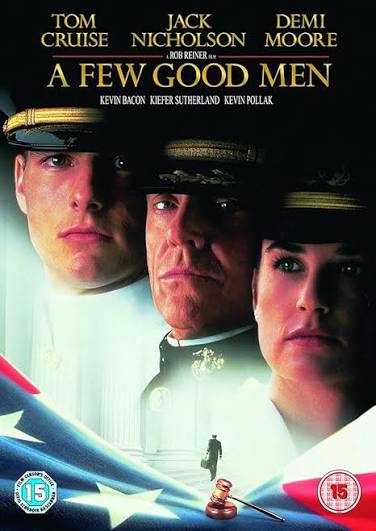
For this assignment, I analyzed the famous courtroom scene from A Few Good Men , where Lieutenant Kaffee questions Colonel Jessup. I chose this scene because it relies heavily on dialogue, camera angles, and character positioning to build tension. After watching the scene three different ways, I noticed many details that I would have probably missed if I had only watched it normally.
Youtube link:https://www.youtube.com/watch?v=9FnO3igOkOk
First Watch: Visuals Only
Watching the scene without sound made me focus entirely on the camera work and the actors’ body language. The camera frequently switches between close up shots of Kaffee and Jessup as the tension builds. Jessup is often shown from slightly lower angles, which makes him seem powerful and intimidating. As Kaffee gains confidence, the camera begins giving him more close up shots as well. The lighting is bright and realistic which fits a courtroom setting. The scene uses a lot of shot-reverse-shot editing whic allows viewers to focus on each character’s reactions. Even without hearing the dialogue, it was clear that the conversation was becoming more intense.
Second Watch: Audio Only
Listening without watching allowed me to focus on the voices and emotions. The dialogue starts pretty calm but becomes more aggressive as the scene progresses. There are pauses between questions and answers that create suspense and make the audience anticipate what will happen next. Jessup’s voice sounds confident and controlled for most of the scene, while Kaffee’s voice becomes more assertive as he continues questioning him. There is no a lot of background music, which makes the dialogue the center of attention. The lack of music also makes the scene feel more realistic and dramatic.
Third Watch: Visuals and Audio Together
Watching the scene normally showed how the visuals and audio work together to build tension. The close up shots become more frequent as the confrontation intensifies and the dialogue becomes faster and more emotional. The camera focuses on facial expressions and reactions which helps the audience understand what each character is thinking. One thing that surprised me was how much the camera angles contributed to the feeling of power and control in the scene. The audio and visuals work well together to make the courtroom feel tense until the famous climax…
This scene connects well to Roger Ebert’s ideas about reading a movie. Ebert explains that filmmakers use framing, character placement, and camera angles to communicate meaning. Throughout the scene, Jessup is often framed in a way that makes him seem dominant, while Kaffee’s growing confidence is shown through tighter shots and stronger positioning. The editing keeps the audience focused on the conflict between the two characters and helps build suspense and by separating the visual and audio elements, I noticed how much each contributes to the overall impact of the scene. The scene works well because all of the camera and sound choices help build tension and lead up to the confrontation.
Sources:
A Few Good Men courtroom scene (Youtube): https://www.youtube.com/watch?v=9FnO3igOkOk
Roger Ebert, “How to Read a Movie”
Leave a Reply