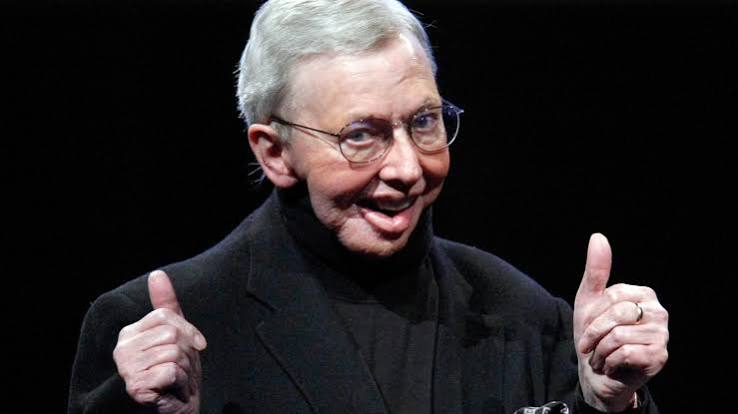
(Picture taken from: https://www.kpbs.org/news/national/2013/04/04/remembering-roger-ebert)
Before this assignment, I mostly watched movies for entertainment and did not spend much time thinking about how directors use camera angles, editing, and framing to tell a story. After reading Roger Ebert’s essay, “How to Read a Movie,” I learned that movies communicate meaning through a lot more than just dialogue and plot. Ebert explains that filmmakers make intentional choices about camera placement, framing, lighting, and editing to change how viewers understand characters, relationships, and emotions. Reading the essay helped me realize that every shot in a movie is carefully planned to guide the audience’s attention and create a specific reaction.
One of the videos I watched was Kubrick // One-Point Perspective. The video showed how director Stanley Kubrick often places people or objects directly in the center of the frame with lines leading toward a single point in the background. This technique draws the viewer’s attention to the center of the image and creates a very balanced look. I learned that this style can make scenes feel organized and controlled, but it can also create tension or make viewers feel uncomfortable depending on what is happening in the scene. It was interesting to see how something simple like framing can have such a strong effect on the audience.
I also watched Examples of Editing Techniques. The video showed how filmmakers use different types of edits, such as cuts, fades, dissolves, and match cuts, to help tell a story. Before watching it, I never really thought about how much editing actually affects a movie. I learned that editing can make scenes feel faster, slower, more dramatic, or more suspenseful depending on how the shots are put together and it can also help show that time has passed or move the audience from one scene to another. After watching the video, I realized that editing helps keep viewers interested and makes the story flow better.
The third video I watched was Camera Angles and Techniques. This video explained how different camera angles can influence how audiences view characters and situations. For example, low angle shots can make a character appear powerful or intimidating, compared to high angle shots that can make them seem weaker or more vulnerable. Close up shots help viewers connect with a character’s emotions, compared to wide shots that provide context and show the setting. I learned that camera angles are very important for storytelling because they affect how viewers interpret what they see on screen.
What surprised me most was that many of these techniques work so naturally that viewers often do not even notice them. After reading Ebert’s essay and watching these three videos, I have a greater appreciation for the amount of planning and creativity that goes into filmmaking. Movies are not just stories that are being recorded by a camera, they are carefully constructed experiences that use many different visual techniques to communicate meaning and guide the audience’s emotions.
Sources:
Kubrick // One-Point Perspective
Leave a Reply