Tag: AudioStorytelling

  • Audio StoryTelling Summary

    This project helped me learn more about audio storytelling and how different production techniques can be used to help engage listeners. Throughout the assignment, I listened to examples of professional audio storytelling, analyzed a podcast episode, and create a couple different projects of my own.

    Part I: Ira Glass Reflection

    https://pmccausland.com/assignments/what-i-learned-about-sudio-storytelling-from-ira-glass/

    In my reflection on Ira Glass’s storytelling videos, I learned that strong stories need both action and reflection to be effective. One of the ideas that stood out to me was how good storytellers create curiosity by giving the audience questions that keep them interested and wanting to hear more. I also learned that storytelling takes time to develop and definitely gets better through practice and experience.

    Part III: Audio Story Analysis

    https://pmccausland.com/assignments/audio-story-analysis-modern-love/

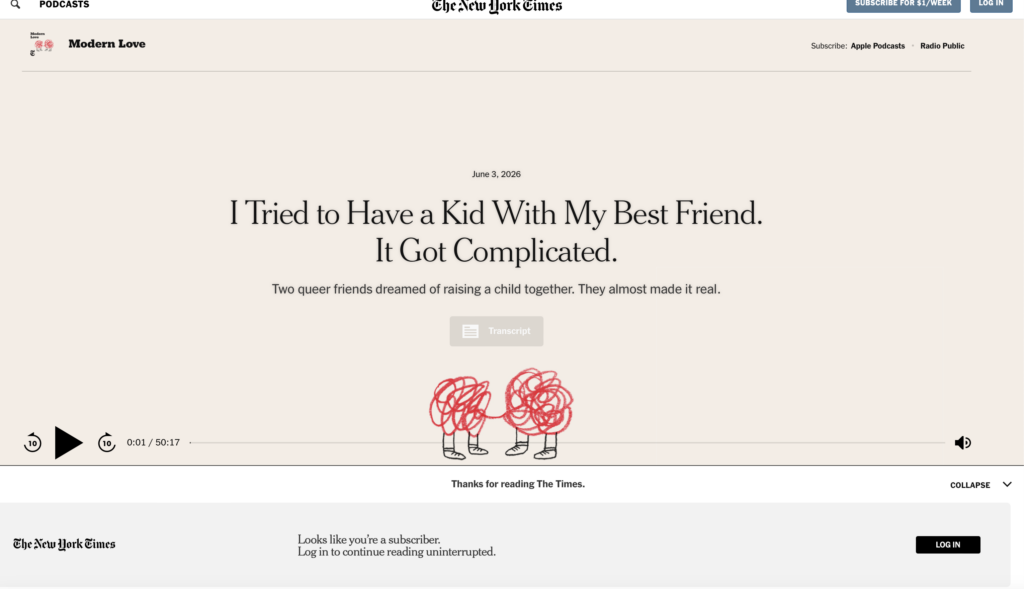
    For my podcast analysis, I listened to the Modern Love episode “I Tried to Have a Kid With My Best Friend. It Got Complicated.” I analyzed how the producers used pacing, music, layering, radio bumpers, silence and other audio techniques to help tell the story.This assignment helped me pay more attention to how podcasts are produced and how those choices affect the listeners experience.

    Part IV: Audio Creation Projects:

    Sounds of my day:

    https://pmccausland.com/assignments/assignment-a/

    Create a Commercial

    https://pmccausland.com/assignments/assignment-b-create-a-commercial/

    Breaking News

    https://pmccausland.com/assignments/assignment-b-breaking-news/

    Recite a Story

    https://pmccausland.com/assignments/assignment-b-story-telling/

    These projects gave me the opportunity to create my own audio content and experiment with different styles of storytelling and production.

    Reflection

    What did you learn about audio storytelling? – I learned that audio storytelling involves a lot more than just simpley recording someon’s voice. Techniques like pacing, music, layering, sound effect, and silence all help shape the listener’s experience. Even small production choices can have a sigificant impact on how a story is remembered.

    What was harder than you expected and why? – The audio editing process was harder than I expected. Recording the audio itself was pretty simple, but combining clips, adjusting audio levels, and working with editing software took more time than I thought it would. It sometimes took a couple attempts to get everything sounding the way I wanted.

    What was easier than you expected and why?– Recording the audio projects was easier than I expected. Once I had a clear idea of what I wanted to create, it was pretty easy to record the content and organize it into seperate projects.

    What drove you crazy and why?– Learning how to use the editing software was the most frustrating part of the assignment. There were times when I had trouble importing files and adding background audio. Small technical problems often took longer to fix than it took to create the actual project.

    What did you enjoy most and why?– I enjoyed my own audio projects the most because they allowed me to be creative and experiment with different types of formats. It was interesting to see how audio alone can communicate information, tell stories, and create emotions without actually relying on visuals.

  • Assignment B Story Telling:

    Reflection:

    For this assignment, i recorded myself reading a short story I focused on speaking clearly and using a chill and relazed tone to keep the listeners engaged. The biggest challenge was trying not to stutter and keeping a steady pace throughout the whole recording.

  • Audio Story Analysis: Modern Love

    For this assignment, I listened to the Modern Love episode “I Tried to Have a Kid With My Best Friend. It Got Complicated.” The episode tells the story of a man who considers having a child with his best friend after years of joking about the idea. What begins as a casual conversation then eventually turned into a serious plan, but the process became a lot more complicated than either of them expected. They work through questions about parenting, relationships, family dynamics and the story explores the challenges that come with creating a unique family.

    One of the things I liked most about the episode was how honest and personal it felt. The narrator openly shared his thoughts and emotions, making it easy to understand his perspective. Rather than just simply explaining what happened, he focused on the emotional impact of the experience and the difficult decisions that were involved.

    A couple different audio techniques were used to strengthen the storytelling. The pacing of the episode changed based on what was happening in the story, like during more emotional moments, the narrator slowed down and took pauses that gave listeners time to think about what was being shared. Background music helped set the mood without taking away attention from the story, and the mix of music and narration made the episode more engaging to listen to.

    I also noticed the Modern Love radio introduction at the beginning of the episode which immediately established the identity of the podcast. There were very few sound effects or environmental sounds used throughout the episode, which seemed intentional because it kept the focus on the narrator and his story he was sharing. The moments of silence stood out to me because they made important ideas and emotions feel a bit more meaningful and I think that these choices made the story feel more intimate and helped me better understand the emotions and challenges the narrator was experiencing.

    After completing Part II of this assignment, I defenitley paid much more attention to these production choices than I normally would. Before learning about audio storytelling, I mostly focused on the content of a podcast. Now I notice how pacing, music, layering, radio bumpers, sound effects, ambient sounds, and silence all contribute to the way a story is experienced by listeners.

    Overall, this episode helped me better understand how audio storytelling works. The narrator’s delivery and the audio techniques used throughout the episode worked well together and helped keep listeners interested. This showed how small production choices can make a big difference in how a story is experienced.

    Episode Link:

     https://podcasts.apple.com/au/podcast/i-tried-to-have-a-kid-with-my-best-friend-it-got-complicated/id1065559535?i=1000770919747

    Link to the The New York Times if the first link doesn’t work:

    https://www.nytimes.com/2026/06/03/podcasts/best-friends-parenting-kid.html?

  • What I learned about Sudio Storytelling from Ira Glass

    After watching Ira Glass’s four part series on storytelling, I learned that good stories need both action and a reflection. One thing that stood out to me was his point that a story is more than just sharing information. A story needs events that move forward and make the audience wonder what will happen next, and he also explains that reflection is important because it helps people understand why those events matter. I thought this was pretty interesting because I feel like it’s easy to focus on what happened and forget to explain why it is important.

    Image source: Wikipedia contributors, Ira Glass, Wikipedia. Wikipedia article on Ira Glass

    Another idea I found interesting was how storytellers create curiosity. Glass talks about how good stories keep the audience asking questions and then slowly answer those questions throughout the story. This keeps people interested and wanting to hear more and when he explained this, I started thinking about podcasts and videos I enjoy and realized they use this technique all the time. For example, some of the Youtube videos I enjoy watching, many of these creators start with a question or challenge at the behinning of the video and then slowly reveal the answer as the video goes on. I don’t always notice it but the curiosity is what keeps me watching until the end.

    The part of the series that stuck with me the most was when Glass discussed the gap between your taste and your ability. He explains that beginners often get frustrated because they know what great work sounds like, but their own work is not at that level yet. I found this pretty encouraging because it reminded me that improvement takes time. His advice was to keep creating, practicing, and learning from your work.

    Overall, the series helped me underatand that strong storytelling takes more than just having a good idea. It requires structure, reflection, and the ability to keep an audience interested. The biggest lesson I took away is that becoming a better storyteller is a process, and the only way to improve is to keep practicing.